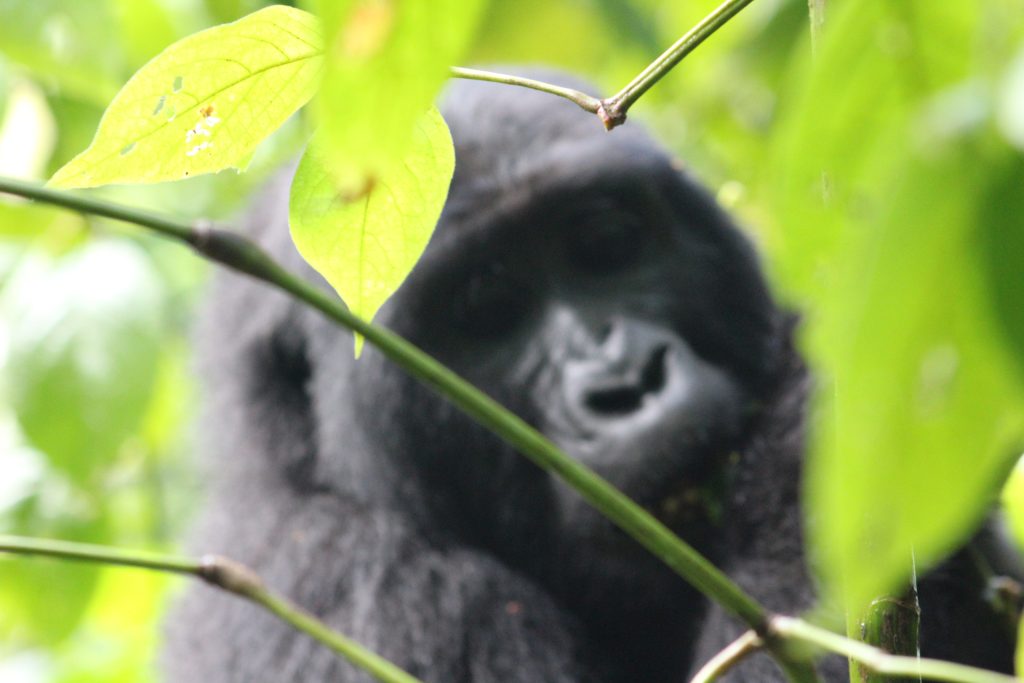
Mountain Gorillas: Facts, Habitat, Population, Range, Diet & Where They Live
Mountain gorillas are among Africa’s most remarkable great apes and one of the world’s most closely protected wildlife species. When we talk about mountain gorillas, we are talking about Gorilla beringei beringei, a subspecies found only in the forests of Uganda, Rwanda, and the Democratic Republic of Congo.
For us, understanding the mountain gorilla begins with where it lives. These gorillas survive in a very restricted range of high-altitude forest, divided between the Virunga Massif and the Bwindi-Sarambwe ecosystem. Their limited range is one reason conservation remains so important.
Today, we can still see mountain gorillas in the wild, but only through carefully regulated tourism and conservation programs. Uganda’s Bwindi Impenetrable National Park and Mgahinga Gorilla National Park, Rwanda’s Volcanoes National Park and the Democratic Republic of Congo’s Virunga National Park protect the remaining habitat.
In this guide, we bring together the facts travelers most often want to know about mountain gorillas — where they live, how large they are, what they eat, how they behave, how their families are organized, how many remain, and where we can see them in the wild.
Mountain Gorilla Quick Facts
Before we explore the details, here are the facts we usually want to know first. The scientific name of the mountain gorilla is Gorilla beringei beringei. Mountain gorillas are a subspecies of the eastern gorilla and are adapted to life in high-altitude forests.
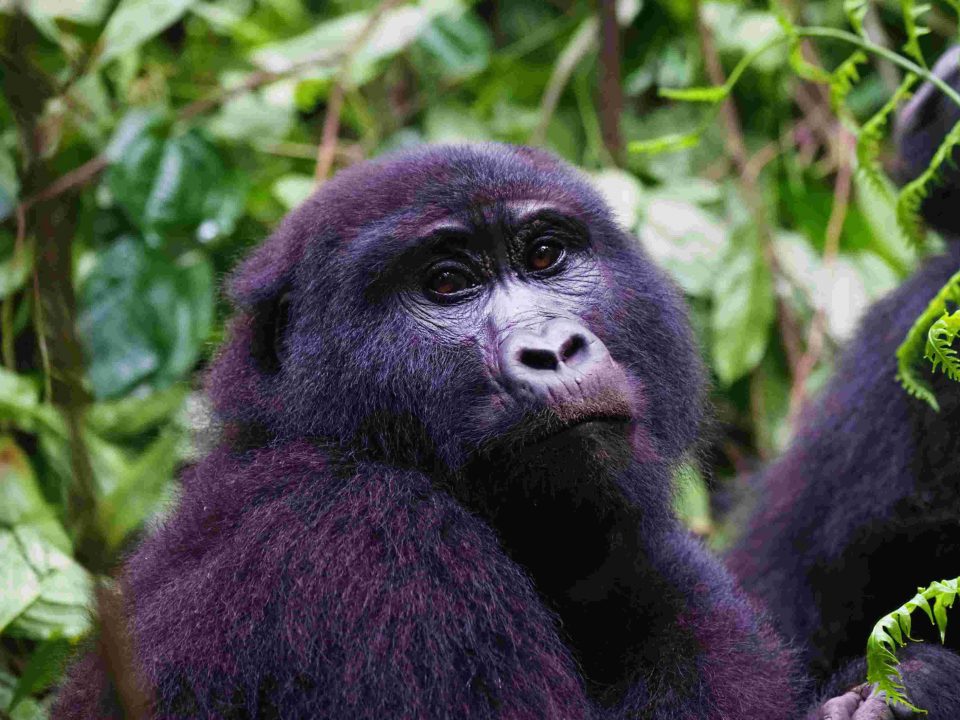
They have exceptionally thick, dark fur, large muscular bodies, and broad chests. Adult males develop the characteristic silver-grey saddle across their backs as they mature, which is why we call them silverbacks. Mountain gorillas are primarily herbivorous. Their diet consists largely of leaves, shoots, stems, bark, roots, flowers, and other vegetation available in their forest habitat.
They live in social groups led by one or more adult males, with females, juveniles, and infants forming the wider family. The world’s remaining mountain gorillas occur naturally in only a small area of Central Africa, making habitat protection and responsible tourism particularly important.
Mountain Gorilla
What Is a Mountain Gorilla?
A mountain gorilla is a subspecies of eastern gorilla adapted to life in the high-altitude forests of the Albertine Rift. Unlike western lowland gorillas, mountain gorillas live in colder, wetter montane environments and have developed longer, denser fur that helps them cope with those conditions.
Their scientific name is Gorilla beringei beringei. We sometimes see mountain gorillas described simply as “gorillas,” but not every gorilla is a mountain gorilla. The distinction matters because mountain gorillas have a very restricted natural range and a different habitat from western lowland gorillas.
Where Do Mountain Gorillas Live?
Mountain gorillas live in only two geographically separated populations. The first occupies the Virunga Massif, a mountainous forest landscape shared by Uganda, Rwanda and the Democratic Republic of Congo. The protected areas associated with this population include Mgahinga Gorilla National Park in Uganda, Volcanoes National Park in Rwanda and Virunga National Park in the Democratic Republic of Congo.
The second population lives in and around Bwindi Impenetrable National Park in Uganda and the adjacent Sarambwe Nature Reserve in the Democratic Republic of Congo. This extremely restricted distribution is one of the defining characteristics of the mountain gorilla.
We cannot find wild mountain gorillas across large parts of Africa. Their natural range is concentrated in this small mountainous region of Central Africa.
Which Countries Have Mountain Gorillas?
Today, we associate wild mountain gorillas with three countries: Uganda, Rwanda, and the Democratic Republic of Congo. Uganda is especially important because it contains the Bwindi population and part of the Virunga population in Mgahinga Gorilla National Park.
Rwanda protects mountain gorillas in Volcanoes National Park, part of the Virunga Massif. The Democratic Republic of Congo protects mountain gorillas in Virunga National Park and the Sarambwe area associated with the Bwindi population. For travelers, this means our practical choices for seeing mountain gorillas depend heavily on the protected area, current security situation, permits, and conservation regulations.
Mountain Gorilla Range and Habitat
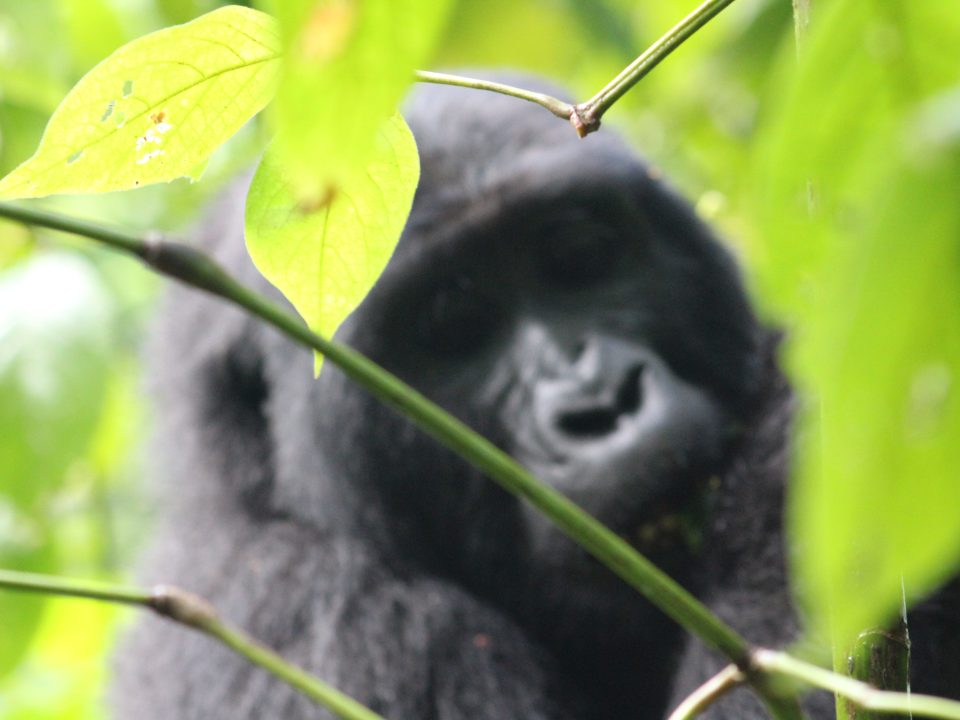
Mountain gorillas occupy high-altitude tropical forests characterized by dense vegetation, frequent rainfall, mist, and relatively cool temperatures. Their habitat includes bamboo zones, montane forest, and higher-altitude vegetation. The exact vegetation available to a gorilla group changes with elevation, season, and location.
The current page describes mountain gorilla habitat at approximately 8,000 to 13,000 feet, but we should avoid presenting one simple altitude range as if every gorilla spends its entire life at exactly those elevations. The important point is that these animals are specialists of high-altitude montane environments.
Their restricted habitat also means that forest protection is directly connected to their survival.
Why Do Mountain Gorillas Live in High-Altitude Forests?
Mountain gorillas are adapted to environments where temperatures are cooler and vegetation differs from the lowland forests occupied by other gorilla populations. Their thick fur provides insulation, while their powerful bodies allow them to move through dense vegetation and steep terrain.
The forests also provide an abundant supply of plant material. For us, this explains why a gorilla trek can involve steep slopes, muddy trails and dense vegetation. We are entering the same challenging mountain forest environment in which the gorillas have evolved.
What Do Mountain Gorillas Look Like?
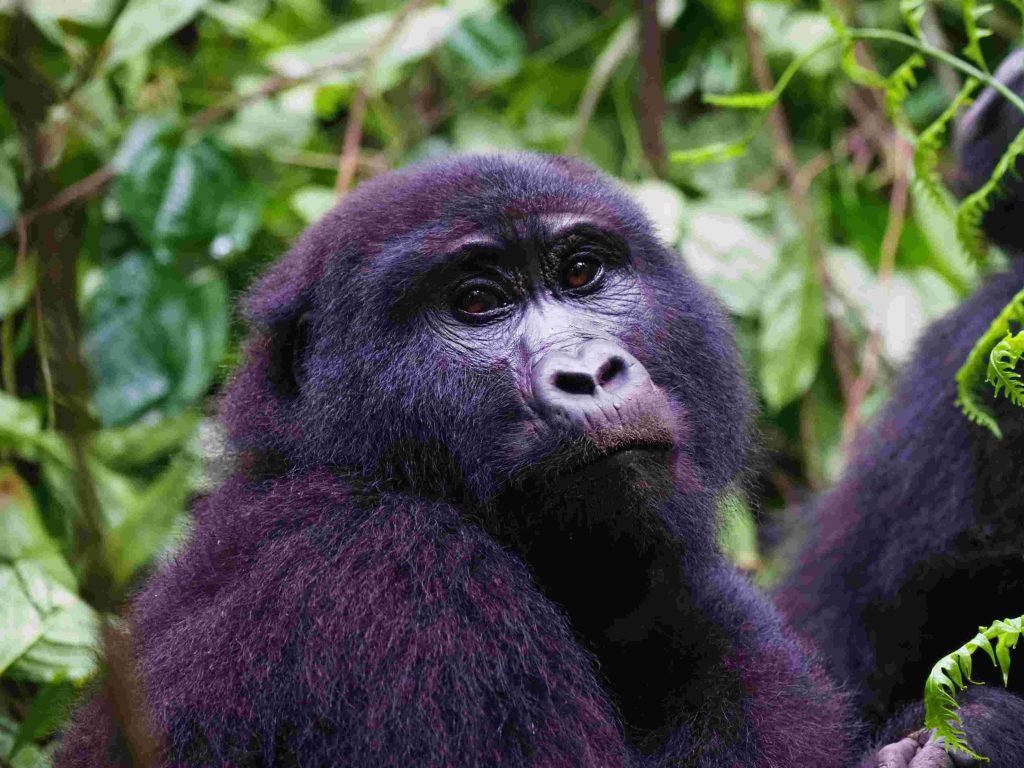
Mountain gorillas have large, muscular bodies, broad chests, powerful arms and dark, dense hair. One of the most recognizable features of a mature male is the silver-grey hair that develops across his back. This is where the term silverback comes from.
Each gorilla also has a unique nose pattern. Researchers and trackers can use these facial and nose characteristics, together with body features and behaviour, to identify individual animals. Their thick fur is particularly noticeable when we see them in the cool, misty forests of Bwindi or the Virunga mountains.

Mountain Gorilla
How Big Is a Mountain Gorilla?
Mountain gorillas are among the largest living primates. Adult males are considerably larger and heavier than adult females. Mature silverbacks can weigh several hundred pounds, while females are substantially smaller.
Rather than focusing on a single maximum figure, we recommend thinking of size in terms of sexual dimorphism: mature males are dramatically more massive than females. When we encounter a silverback in the forest, the broad shoulders, muscular arms, and large chest make that difference immediately obvious.
What Is a Silverback Mountain Gorilla?
A silverback is a mature male gorilla recognized by the silver-grey hair that develops across his back. The silverback often plays a central role in group life. He may lead movements, help maintain group cohesion, intervene in conflicts, and respond to threats.
However, gorilla societies are more complex than the simple idea that one male “rules” every group. Some groups contain multiple adult males, and social relationships can change over time. The silverback’s role is therefore best understood as part of a wider social structure rather than simply that of a dominant animal.
How Do Mountain Gorillas Live in Groups?
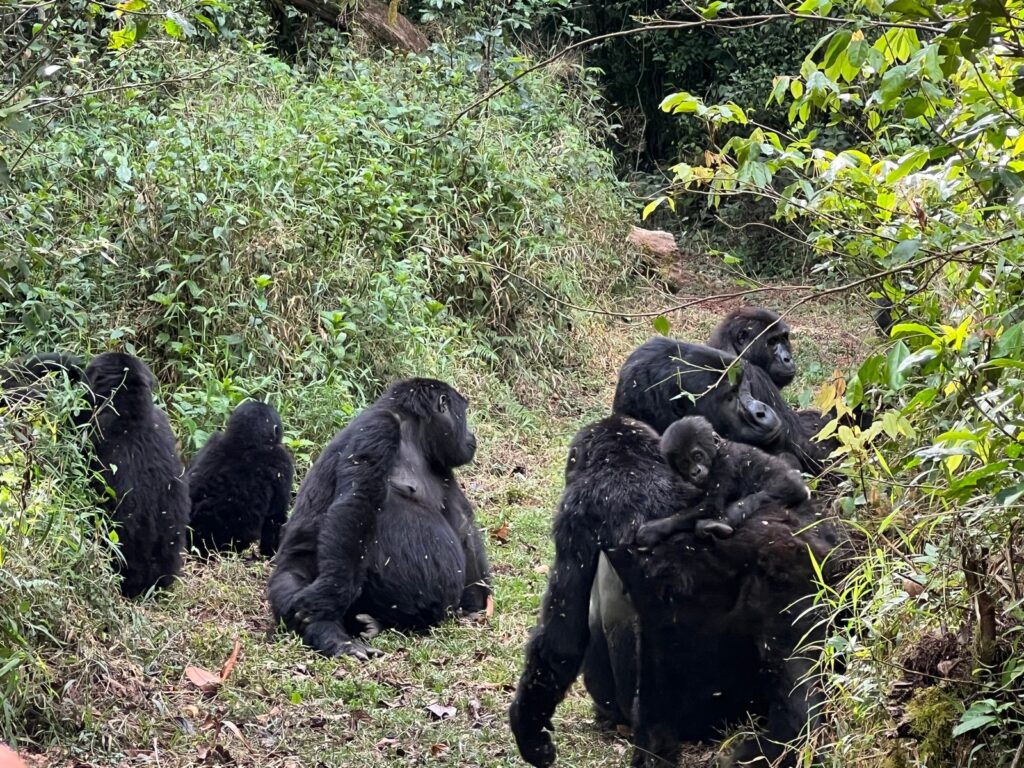
Mountain gorillas are highly social animals. A typical group can include an adult male or several males, adult females, juveniles, and infants. Group size varies, and groups can change as individuals mature, transfer between groups, or as social structures develop.
Family life is an important part of what makes gorilla encounters so memorable. We may see mothers caring for infants, young gorillas playing, adults grooming one another, and group members resting close together.
What Do Mountain Gorillas Eat?
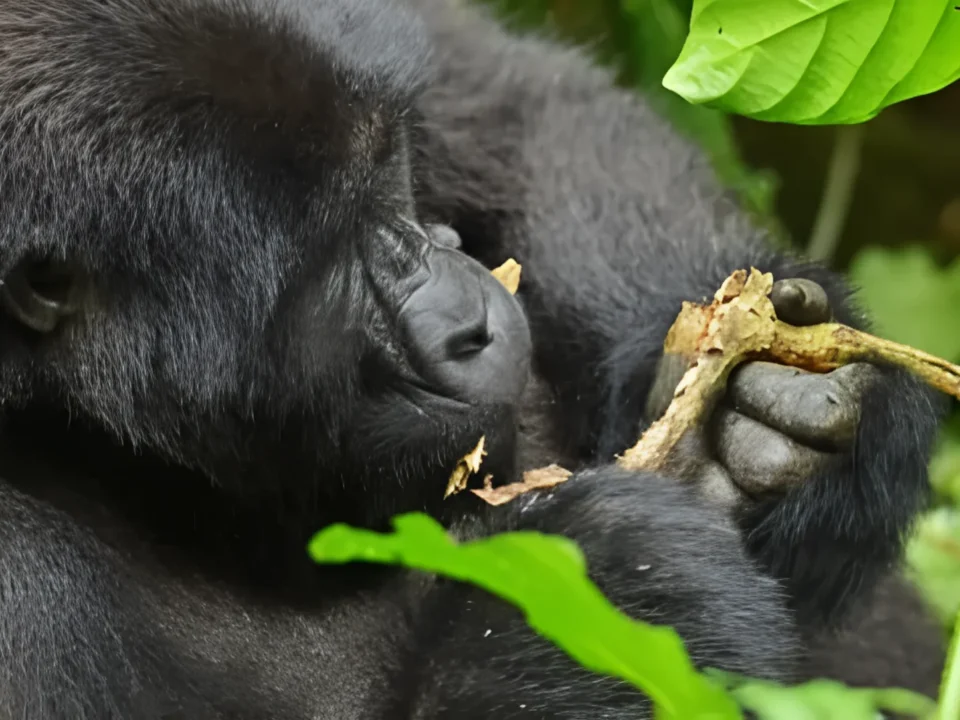
Mountain gorillas are primarily herbivores. Their diet includes leaves, stems, shoots, bark, roots, flowers, and other vegetation. Bamboo and other plant species can be important food sources depending on the location and season.
Because fruit is relatively scarce in their high-altitude environment, mountain gorillas rely heavily on leafy vegetation. They spend a significant part of the day feeding, moving between feeding areas and resting.
Their diet also explains why protecting large, connected areas of forest is so important. We are not protecting only the animals themselves; we are protecting the plants and ecosystem that sustain them.
Mountain Gorilla Behaviour
Mountain gorillas are generally calm animals, especially when they are accustomed to the controlled presence of people. Much of their daily life revolves around feeding, resting, grooming, travelling, and social interaction.
Young gorillas are particularly playful. During a trek, we may see juveniles wrestling, chasing one another, or exploring their surroundings while adults remain nearby. Grooming also plays an important social role because it helps reinforce relationships within the group.
How Do Mountain Gorillas Communicate?
Mountain gorillas communicate through a combination of vocalizations, body posture, facial expressions, and physical gestures. We may hear grunts, hoots, barks, screams, roars, and other sounds during observations.
A gorilla’s body language can be just as important as its voice. Posture, movement, and facial expression can communicate tension, reassurance, submission, interest, or warning. This is one reason we should always listen carefully to our ranger and guide during a gorilla encounter. Understanding gorilla behaviour helps us behave appropriately around them.
Are Mountain Gorillas Dangerous?
Mountain gorillas are powerful wild animals, but they are not naturally looking for conflict with humans. The groups visited by tourists have undergone habituation that allows them to tolerate controlled human presence.
That does not mean they are domesticated or tame. We should still treat every gorilla as a wild animal. We maintain the required distance, avoid sudden movements, follow the ranger’s instructions, and never attempt to touch or feed a gorilla.
A silverback may display impressive behaviour when he feels threatened, including chest beating, vocalizing, or charging. These displays can look frightening, but they are not necessarily an attempt to attack.
How Intelligent Are Mountain Gorillas?
Mountain gorillas display sophisticated social behaviour, learning, and problem-solving abilities. They recognize individuals, remember social relationships and learn behaviours within their groups.
Their intelligence is particularly apparent when we watch how they interact with one another. Young gorillas learn by observing older members, while adults maintain complex relationships within the group. We should be careful, however, about turning every interesting behaviour into a claim that gorillas think exactly like humans. They are highly intelligent great apes with their own distinctive social and cognitive abilities.
How Long Do Mountain Gorillas Live?
Mountain gorillas can live for several decades. Their lifespan in the wild depends on factors including health, injury, disease, food availability, and environmental conditions. Because mountain gorilla populations are closely monitored, researchers can follow individual animals over many years and build detailed knowledge of their life histories.
How Do Mountain Gorillas Reproduce?
Female mountain gorillas generally mature earlier than males and typically give birth to a single infant after a gestation period of around eight and a half months. Twins are rare. Infants depend heavily on their mothers during their early development and remain closely attached to them as they grow.
Because reproduction is relatively slow, population recovery cannot happen quickly. Protecting adult females, infants, and their habitat is therefore critical to maintaining healthy populations.
How Many Mountain Gorillas Are Left?
The mountain gorilla population has recovered significantly from the severe declines experienced during the twentieth century. Current conservation estimates place the global population at more than 1,000 individuals, but we should always use the latest official census or conservation authority figures when stating a precise number.
The important story is not simply that the population is small. It is that the population is geographically restricted to a very small area, making the species highly dependent on continued protection of its remaining habitat.
Are Mountain Gorillas Endangered?
Yes. Mountain gorillas remain classified as Endangered. Their conservation story is nevertheless one of the more encouraging examples of great-ape conservation. Long-term protection, veterinary monitoring, anti-poaching work, scientific research, community involvement, and regulated tourism have all contributed to their recovery.
The improvement in population numbers should not make us assume the species is safe. With such a restricted range, disease outbreaks, habitat pressure, insecurity, and other threats can have serious consequences.
What Threatens Mountain Gorillas?
The biggest threats to mountain gorillas are closely connected to human activity and the vulnerability of their restricted habitat. Habitat loss can reduce the forest available to gorillas. Human encroachment can increase pressure around protected areas. Disease transmission is another important concern because gorillas are biologically close to humans.
Illegal activities, insecurity, and environmental changes can also affect conservation efforts. Climate change is an additional long-term concern because changes in temperature, rainfall, and vegetation can alter mountain ecosystems.
How Are Mountain Gorillas Protected?
Mountain gorilla conservation depends on cooperation between governments, protected-area authorities, researchers, conservation organizations, veterinarians, rangers, and local communities. Responsible tourism is also part of this conservation system.
When we visit mountain gorillas through regulated trekking, permit revenue and tourism activity can support conservation programs and communities surrounding the parks. The relationship between tourism and conservation is therefore important, but we should describe it accurately: tourism is one component of a much larger conservation effort rather than the sole reason gorilla numbers have increased.
Mountain Gorilla vs Lowland Gorilla
Mountain gorillas and lowland gorillas are both members of the gorilla family, but they live in very different environments. Mountain gorillas have longer, denser fur adapted to cooler high-altitude forests. Western lowland gorillas occupy lower-elevation tropical forests.
Mountain gorillas also have an exceptionally restricted geographic range, while western lowland gorillas occupy a much broader area of Central Africa. When we compare them, habitat is one of the easiest differences to understand: mountain gorillas are specialists of montane forests, while lowland gorillas are associated with tropical lowland rainforest environments.
Where Can We See Mountain Gorillas in the Wild?
We can see mountain gorillas in the wild only within their protected range in Uganda, Rwanda, and the Democratic Republic of Congo. In Uganda, the principal destinations are Bwindi Impenetrable National Park and Mgahinga Gorilla National Park.
In Rwanda, mountain gorilla trekking takes place in Volcanoes National Park. In the Democratic Republic of Congo, Virunga National Park protects part of the Virunga population, while the Sarambwe area is associated with the wider Bwindi population.
For travelers choosing where to go, we need to consider more than the gorillas themselves. Permit availability, park access, accommodation, trekking conditions, travel logistics and current security conditions all matter.
Where Is the Best Place to See Mountain Gorillas?
There is no single best destination for every traveler. We often recommend Uganda to travelers who want to combine gorilla trekking with a broader Uganda safari and have an interest in exploring destinations such as Queen Elizabeth National Park, Kibale, or Murchison Falls.
Rwanda can appeal to travelers who value accessibility and want to combine gorilla trekking with a shorter itinerary. The right choice depends on our budget, itinerary, interests, and preferred travel style.
Can We See Mountain Gorillas in Uganda?
Yes. Uganda is one of the world’s most important mountain gorilla destinations. We can trek mountain gorillas in Bwindi Impenetrable National Park and Mgahinga Gorilla National Park, subject to current permit availability and park regulations.
Bwindi is particularly significant because it protects one of the two major mountain gorilla populations. For travelers who want a longer and more specialized encounter, Uganda also offers the Gorilla Habituation Experience in Bwindi.
What Is the Difference Between Gorilla Trekking and Gorilla Habituation?
Gorilla trekking involves visiting a habituated gorilla group for a regulated wildlife encounter. The Gorilla Habituation Experience is different because it involves spending substantially longer observing a gorilla group undergoing habituation to human presence.
We therefore recommend standard trekking for travelers who want the classic gorilla encounter, while habituation can be particularly appealing to people who want more observation time and a deeper interest in gorilla behaviour and conservation.
Why Are Mountain Gorillas Important?
Mountain gorillas matter because they are a unique part of Africa’s natural heritage and because their survival demonstrates what long-term conservation can achieve. Protecting them also protects the high-altitude forests in which they live.
For us as travelers, the most meaningful encounter is not simply seeing a gorilla and taking a photograph. It is understanding that these animals survive because forests, wildlife, and communities are being protected together. Responsible tourism gives us an opportunity to experience mountain gorillas while contributing to the economic system surrounding conservation.

Mountain Gorilla
Our Experience With Mountain Gorillas
We have spent years helping travelers experience mountain gorillas in Uganda and Rwanda, and one lesson becomes clear every time: the gorillas are not the only story. The forest, trackers, rangers, conservation work, and communities around the protected areas are all part of the experience.
When we enter Bwindi or the Virunga mountains, we are entering a living ecosystem rather than visiting an attraction designed for tourists. That is why we encourage travelers to approach gorilla trekking with patience and respect. We cannot control where the gorillas move or what behaviour they will display. We can only observe carefully and allow the experience to unfold naturally.
Mountain Gorilla FAQs
What is the scientific name of the mountain gorilla?
The scientific name is Gorilla beringei beringei, a subspecies of the eastern gorilla.
Where do mountain gorillas live?
Mountain gorillas live in two populations in Central Africa: the Virunga Massif shared by Uganda, Rwanda and the Democratic Republic of Congo, and the Bwindi-Sarambwe ecosystem centred on Uganda’s Bwindi Impenetrable National Park.
How many mountain gorillas are left?
More than 1,000 mountain gorillas remain, although we recommend checking the latest official conservation census when using a precise current figure.
What do mountain gorillas eat?
They mainly eat leaves, shoots, stems, bark, roots, flowers, and other vegetation.
How big is a mountain gorilla?
Adult males are much larger than females and can weigh several hundred pounds. Their broad chests, muscular arms, and large bodies make them the largest of the living gorilla forms.
Are mountain gorillas dangerous?
They are powerful wild animals but are generally calm around habituated human observers. We must always follow ranger instructions and maintain the required distance.
How long do mountain gorillas live?
Mountain gorillas can live for several decades, although lifespan varies according to health and environmental conditions.
What is a silverback?
A silverback is a mature male gorilla whose back develops distinctive silver-grey hair.
Are mountain gorillas endangered?
Yes. Mountain gorillas remain classified as Endangered despite significant conservation gains.
Where can we see mountain gorillas?
We can see wild mountain gorillas in protected areas of Uganda, Rwanda and the Democratic Republic of Congo.
Can we see mountain gorillas in Uganda?
Yes. Uganda’s principal mountain gorilla destinations are Bwindi Impenetrable National Park and Mgahinga Gorilla National Park.
See Mountain Gorillas in Uganda
Learning about mountain gorillas is one thing; seeing them moving through their natural forest habitat is another.
If we are planning a Uganda gorilla safari, we can help with gorilla permits, accommodation, transport, and a wider itinerary around Bwindi and other Ugandan wildlife destinations.
Plan Our Uganda Gorilla Safari →