The Strategic Deployment Guide
In the high-stakes world of East African exploration, timing is the primary constraint between a logistical failure and a once-in-a-lifetime success. As we navigate the safari landscape, the question isn’t just about the duration of the trek itself, but the total mission window required to stabilize your arrival, execute the encounter, and manage the physical recovery.
At Gorilla Trekking Safaris, we move beyond the standard travel brochure to provide the Standard of Truth. To accurately determine how many days you need for gorilla trekking in Uganda, one must analyze the geographic Transfer Lag, the biometric demands of the Bwindi massif, and the tactical benefits of different itinerary durations.
-
The 3-Day Minimum: The Frictionless Baseline
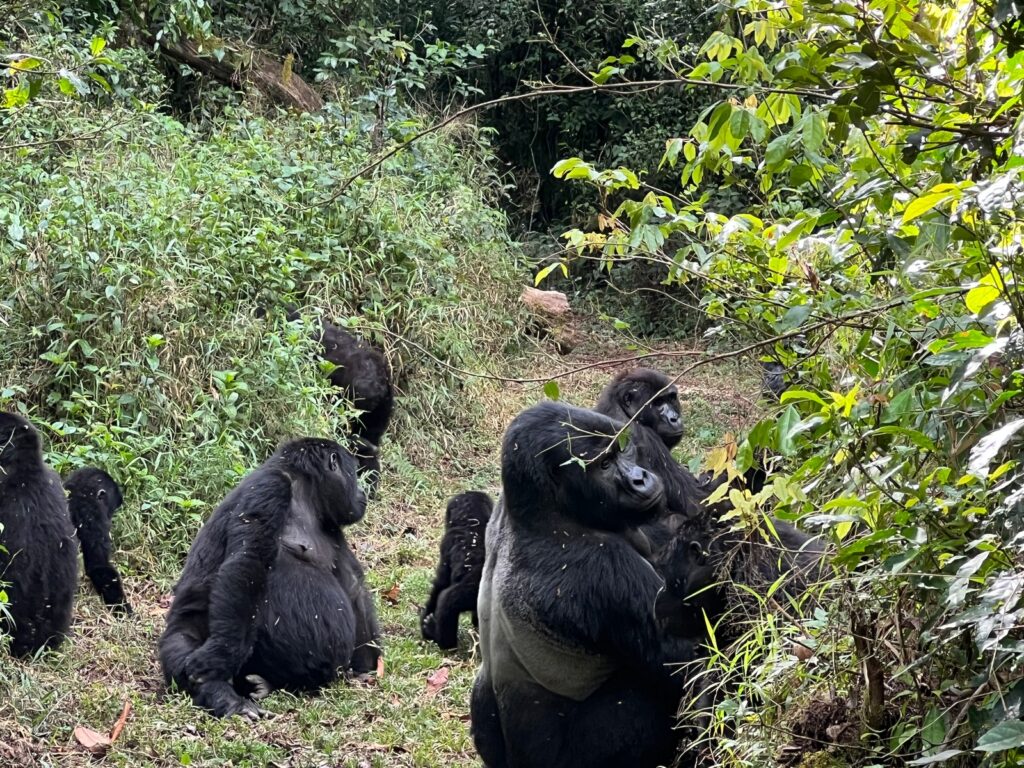
While the encounter with the gorillas lasts precisely 60 minutes (or 4 hours for the Habituation Experience), a 3-day safari is the absolute minimum requirement for a successful deployment starting from Entebbe or Kampala.
The 3-Day Mission Architecture
- Day 01: The Deployment. An 8-to-10-hour drive from Entebbe to Bwindi Impenetrable National Park. This is a cross-country transit involving significant elevation changes.
- Day 02: The Encounter. The trekking mission itself. You enter the forest at 08:30 AM and return between 2:00 PM and 6:00 PM, depending on the gorillas’ movement.
- Day 03: The Extraction. Return transit to the airport or your next mission sector.
Tactical Verdict: The 3-day window is High-Intensity. It is ideal for travelers with limited time who possess the physical bandwidth to handle two days of long-distance road travel, bookending a strenuous mountain hike.
-
The 4-Day Recommendation: The Standard of Truth
In Gorilla trekking safaris, a 4-day itinerary is recommended as the optimal balance of efficiency and recovery.
Why 4 Days?
- Mitigating Travel Fatigue: The 10-hour drive through the Ugandan highlands can be exhausting. A 4-day schedule allows for a buffer day or a later start, ensuring that your biometric markers (heart rate and muscle readiness) stabilize before the trek.
- Secondary Missions: A 4-day window provides space for a Batwa Cultural Encounter or a birding excursion in the Mubwindi Swamp, adding layers of Cultural Intelligence to your wildlife mission.
- Lake Bunyonyi Integration: Most 4-day missions include a sunset recovery session at Lake Bunyonyi, the second deepest lake in Africa, providing a necessary psychological reset after the intensity of the forest.
-
The 2-Day Kigali Shortcut: A Tactical Arbitrage
For travelers seeking to minimize Transfer Lag, the 2-day trek starting from Kigali, Rwanda, is the most efficient tactical play.
- The Logic: Bwindi (Uganda) is only a 4- to 5-hour drive from Kigali (Rwanda), compared with 10 hours from Entebbe.
- The Cross-Border Variable: This requires an East African Tourist Visa ($100), allowing seamless movement between Rwanda and Uganda.
- Mission Impact: You can fly into Kigali on Day 1, cross the Cyanika or Katuna border, trek on Day 2, and fly out of Kigali that evening.
-
Understanding Activity Timing: The 60-Minute Rule
Regardless of your total trip duration, the Standard of Truth for the encounter itself is strictly regulated by the Uganda Wildlife Authority (UWA).
| Activity Stage | Duration | Mission Note |
| Briefing | 30 Minutes | Safety protocols and sector assignment. |
| The Hike | 2 – 7 Hours | Varies by gorilla family location and terrain. |
| The Encounter | 60 Minutes | Absolute limit for standard permits. |
| The Extraction | 1 – 3 Hours | Return hike to the trailhead for the certificate ceremony. |
The Habituation Difference: If you opt for the Habituation Experience (available in the Rushaga sector), your Encounter Window increases to 4 hours. This requires a guaranteed 4-day itinerary to account for the increased caloric burn and recovery time.
-
Physicality and Terrain: The Grit Factor
How many days you choose should be directly influenced by your physical readiness. Bwindi is Impenetrable for a reason.
- Altitude: You will be trekking between 1,160m and 2,607m. Even a 3-day trip feels like 5 days on the body due to the oxygen-thin air.
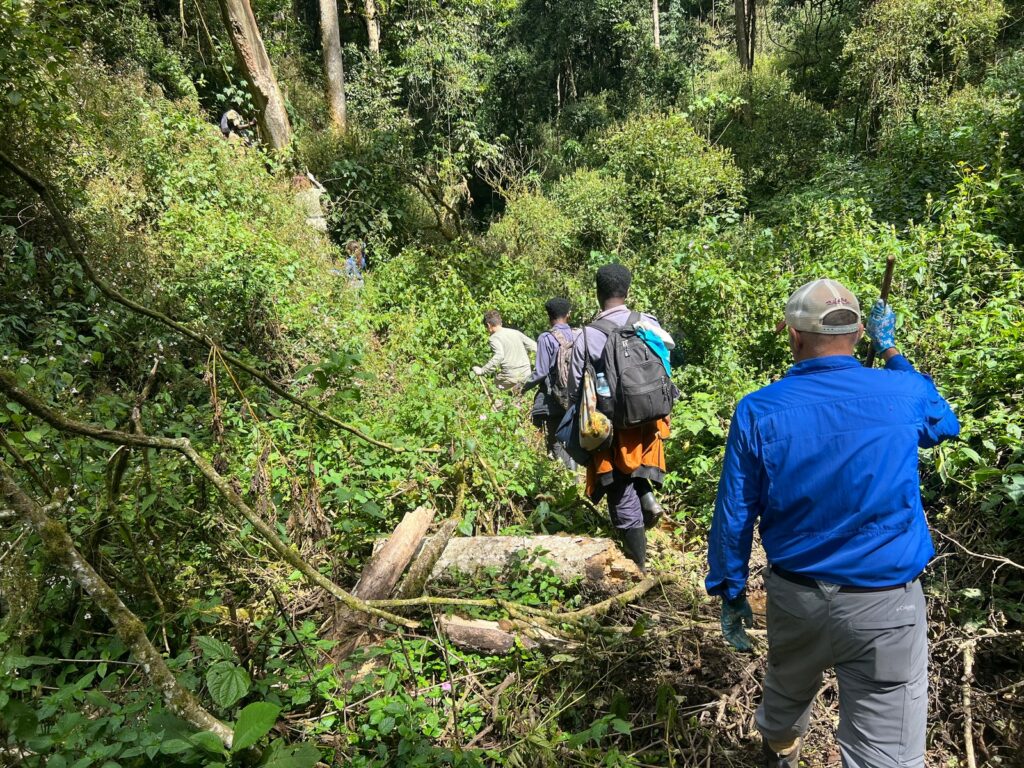
- Vegetation: Rangers often have to machete paths through dense undergrowth.
- The Recovery Variable: If you are over the age of 50 or have minor mobility constraints, a 5-day Slow-Burn itinerary is recommended. This allows for a full day of rest before and after the trek, ensuring you aren’t fighting Delayed Onset Muscle Soreness during your return travel.
-
Logistical FAQ: Optimizing Your Calendar
Can I do a 1-day gorilla trek?
Negative. Even with a private helicopter charter from Entebbe (an expensive but viable option), the flight logistics and trekking start times (08:00 AM) make a 1-day mission practically impossible and biologically exhausting.
Is there a Best Day of the week to trek?
In the UWA Live Portal, permits are issued for specific dates. In mid-week permits (Tuesday–Thursday), we occasionally offer slightly smaller trekking groups, though the limit is always 8 guests per family.
How many days will I need to see both Gorillas and Chimpanzees?
To combine Bwindi (Gorillas) with Kibale Forest (Chimpanzees), you need a minimum of 5 to 6 days. This accounts for the 6-hour transfer between the two primate hubs.
Conclusion: Finalizing Your Manifest
In the Grit of Failure, safari planning is almost always underestimated.
- The Efficiency Play: 2 Days (via Kigali).
- The Standard Mission: 3 Days (via Entebbe).
- The High-Fidelity Experience: 4-5 Days (Recommended).
Ready to stabilize your dates?
At Gorilla trekking safaris, our architects monitor the permit portal hourly. We recommend securing your 3-to-5-day window at least 6 months in advance to ensure your sector assignment matches your lodge location.
Would you like us to run a 24-hour Soft-Hold on permits for a 3-day or 4-day mission window for your preferred dates?