
About the African Lion
The lion also known as the King of the Jungle is one of the ‘big cats’ you will find in the African wildlife parks. Lions are classified into two subspecies which are; Asiatic lions found in India and the African lions found in central and southern Africa. The Lions live in family units called prides which include up-to 3 males and a dozen female lions or more. The young female lions (cubs) stay with the group pride of lions as they grow older. The male young lions eventually leave and make their own prides taking over a group headed by another male.
Size & Characteristics
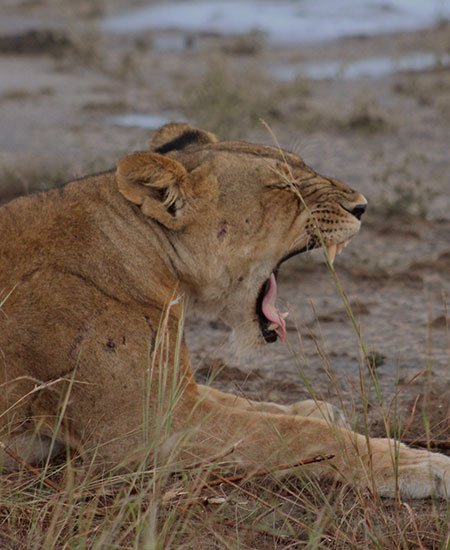
The African lion weighs between 120 to 191 kilograms and is about 1.4 to 2 meters long from its head to rump. Most of the Asiatic lions are bigger than the African lions according to WWF. The Male African lions are generally larger than the females with mane of hair around their heads. This hair makes them look more impressive to females and intimidating to other males. It also protects them during fights with other lions over mating rights and territories which include square miles of grasslands, scrub or open woodlands. When hunting, the female lions work together and are the primary hunters for their pride.
Diet
The African lion largely hunts and preys on animals found within grasslands including antelopes, zebras and wildebeest. The other species – the Asiatic lions, largely feed on large animals such as goats, nilgai, chital, Sambhar and buffaloes. They also hunt and prey smaller animals.
Habitat
The African Lion lives in different parts of central and southern Africa. It is largely found in these countries Angola, Botswana, Mozambique, Tanzania, Kenya, Uganda, Rwanda, South Africa, and other parts in sub-Saharan Africa. The big cats wander territories of 100 square miles which consists of scrub, grasslands or open woodlands. In Uganda, lions are commonly found in Murchison falls national park, Ishasha sector in Queen Elizabeth national park & Kidepo Valley National park.
Offspring
The male and female lions are ready for mating at 3 – 4 years of age. The gestation period is around 4 months and when giving birth, the female lion will hide the cubs away from the others for about 6 weeks. The cubs weigh around 1.5 kgs at birth and completely depend on their mother. All of the females in a pride of lions mate at the same time and after the first 6 weeks, the cubs are taken care of by all of the females.
Conservation
Lions have been celebrated throughout history for their courage and strength. They once roamed most of Africa and parts of Asia and Europe. Today they are found only in parts of central and sub-Saharan Africa & in India’s Gir Forest. The African Lion is listed as vulnerable on the IUCN (International Union for Conservation of Nature) Red list of threatened species. Their numbers have been decreasing over the last two decades and currently their population is about 30,000 to 100,000. One of the commonest causes for the decrease in population is trophy hunting and habitat loss. A lot of conservation efforts have been done in most of the African National parks especially Uganda & Rwanda.
Other Amazing facts about the African Lion
- In a pride of lions, the females are the main hunters and form parties to round up the fastest animals within their unit.
- Lions can kill animals that weigh up to 500 kg and they do this while using their powerful jaws to snap the prey’s neck or to strangle it to death.
- Male African lions will kill all of the cubs in a pride to easily take over and avoid competition.
- The Lions and Tigers are very identical if you shaved all their hair off.
- Lions can run up to 50 mph (80 kph) for short distances and leap as far as 36 feet (11 m).
